Friday, April 03, 2026
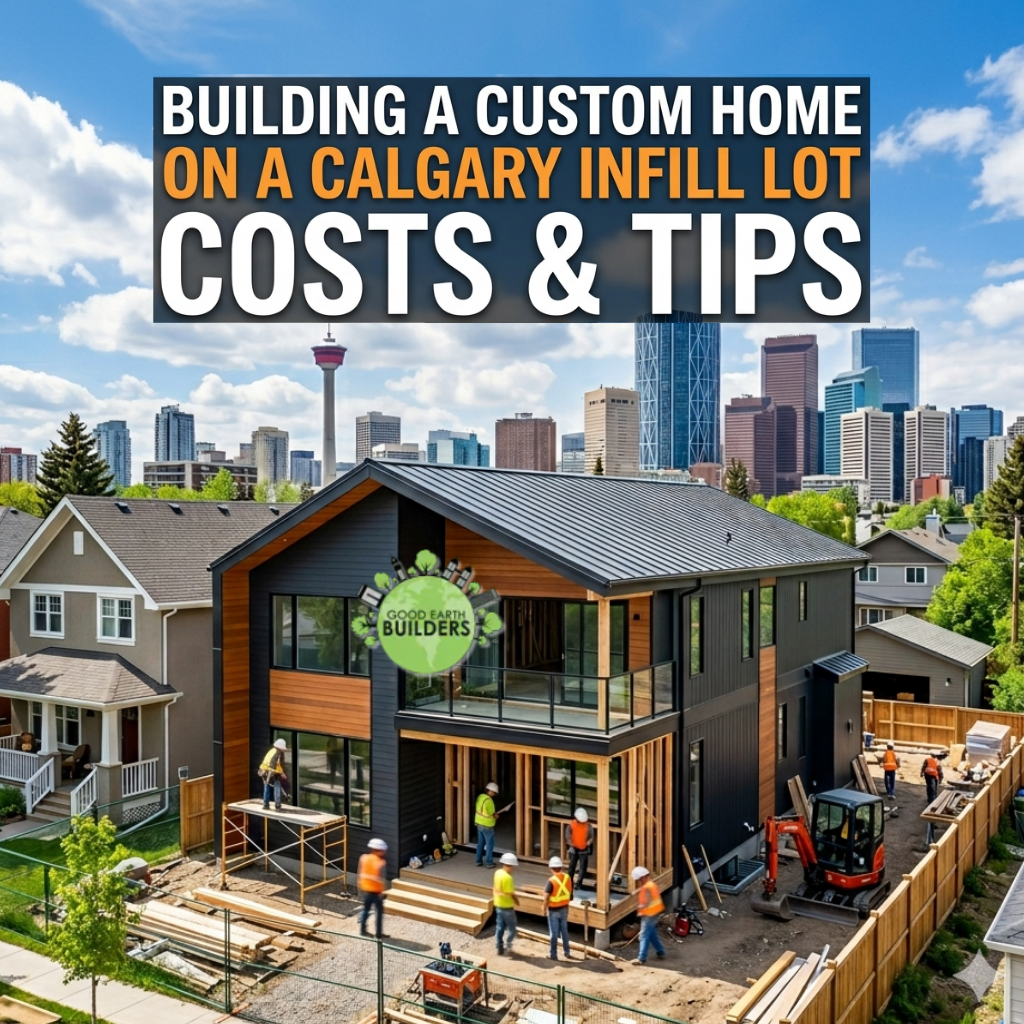
Building a custom home on an infill lot in Calgary is one of the most rewarding — and challenging — ways to create your dream house. Instead of buying a production home in a new suburb, you purchase an existing lot in a mature neighborhood and design and build exactly what you want.
In 2026, infill custom homes are especially popular. Many families want to stay close to downtown, good schools, and established communities rather than move to new subdivisions. They also want energy-efficient, hail-resistant, and personalized homes that fit Calgary’s unique climate. However, infill lots come with higher costs, stricter rules, and more planning than greenfield (new suburb) builds.
This detailed guide explains everything you need to know about building a custom home on a Calgary infill lot in 2026. We’ll cover realistic costs, land prices, zoning and permitting, design considerations, energy efficiency, hidden fees, timelines, and practical tips to avoid common mistakes. Whether you’re a first-time builder or an experienced homeowner, you’ll get clear, straightforward information to help you plan successfully.
What Makes Infill Custom Homes Different in Calgary?
An infill lot is a piece of land in an already-built neighborhood, often with an older house that gets demolished or renovated. Unlike new suburban lots that come with services already in place, infill lots can have surprises: older utilities, narrow access, mature trees to protect, or neighbor concerns.
Advantages of infill custom homes:
- Walkable, established neighborhoods with trees, parks, and community feel
- Closer to downtown, schools, and amenities
- Higher long-term resale value in desirable areas
- Opportunity to create a truly unique, energy-efficient home
Challenges:
- Higher land cost per square foot
- Stricter zoning and setback rules
- More complex permitting and neighbor consultations
- Limited space for construction equipment and material storage
In 2026, with construction costs stabilizing and incentives for energy-efficient builds still available, infill custom homes remain a strong option for people who value location and personalization.
Realistic Costs of Building a Custom Home on an Infill Lot in 2026
Costs vary widely depending on lot size, home size, finishes, and location. Here is a realistic breakdown for a typical 2,200–2,800 sq ft custom home on a standard infill lot.
1. Land Purchase
- Average infill lot price in desirable neighborhoods: $450,000 – $850,000
- Premium lots (larger, better location, or with views): $900,000 – $1.4M+
- Demolition of existing house (if needed): $15,000 – $40,000
2. Design and Pre-Construction
- Architectural design and engineering: $25,000 – $60,000
- Geotechnical/soils report and surveys: $8,000 – $20,000
- Energy modeling and consultant fees: $5,000 – $12,000
3. Construction Costs
- Base construction (structure, framing, mechanical): $400 – $650 per sq ft
- For a 2,500 sq ft home: $1,000,000 – $1,625,000
- Premium finishes, smart home systems, or high-end kitchens: add $150–$300 per sq ft
4. Site and Infrastructure
- Utility connections and upgrades: $30,000 – $100,000
- Driveway, landscaping, and fencing: $25,000 – $60,000
- Foundation work (sometimes deeper on infill lots): $40,000 – $80,000
5. Permits, Fees, and Soft Costs
- Development permits and city fees: $20,000 – $50,000
- Legal and closing costs: $10,000 – $25,000
- Insurance and project management: $15,000 – $35,000
Total Estimated Cost (excluding land): $1.3M – $2.2M for a mid-to-high-end 2,500 sq ft custom home. Grand Total (including land): $1.8M – $3.2M+ depending on location and specifications.
Important note: These are 2026 averages. Actual costs can be 10–20% higher or lower based on design complexity, material choices, and how well you manage the project.
Zoning and Permitting on Infill Lots in Calgary 2026
Calgary has specific rules for infill development to protect neighborhood character:
- Setbacks: Front, side, and rear yard requirements vary by district
- Height limits: Usually 2–3 storeys, with rules for roof pitch and massing
- Lot coverage: Maximum percentage of the lot that can be built on
- Parking: Minimum spaces required, including for secondary suites
The City’s Infill Fast Track Program can speed up approvals for projects that meet design guidelines. Still, expect 4–8 months for full permitting on most custom infill homes. Early consultation with a planner is highly recommended.
Many successful projects include legal secondary suites (basement or carriage house) because they qualify for extra incentives and add value.
Energy Efficiency and Climate Considerations
Calgary’s harsh climate (extreme cold, hail, chinooks, high UV) makes energy-efficient design essential.
Recommended features for 2026 infill custom homes:
- Cold-climate air-source heat pumps
- Triple-pane, low-E windows
- High insulation levels (R-50+ attic, R-24+ walls)
- Heat-recovery ventilation (HRV)
- Solar-ready wiring or full solar array
- Class 4 impact-resistant roofing and hail-resistant siding
These features qualify for CMHC Eco Improvement refunds (up to 25% on mortgage premiums) and CEIP rebates (up to 10%). They also reduce monthly utility bills by 30–50% and increase resale appeal.
Hidden Costs and Budgeting Tips Most People Miss
Many first-time infill builders get surprised by these expenses:
- Utility upgrades — Older neighborhoods often need new electrical, water, or sewer services ($30K–$100K).
- Neighbor consultations and variances — Can add legal and redesign costs.
- Winter construction delays — Plan extra time and weather protection.
- Site access limitations — Narrow streets mean higher crane or material handling fees.
- Contingency — Budget at least 15% extra for unexpected issues.
Smart budgeting tip: Work with a quantity surveyor or experienced builder early to create a detailed cost plan. Include soft costs at 25–30% of hard construction costs.
Design Tips for Successful Infill Custom Homes
- Keep the massing and height respectful of neighboring homes to speed up approvals.
- Maximize natural light with strategic window placement while maintaining privacy.
- Plan for future flexibility — legal secondary suites add significant value.
- Choose durable, hail-resistant materials suited to Calgary’s climate (fiber cement siding, Class 4 roofing, triple-pane windows).
- Incorporate outdoor living space even on smaller lots (decks, patios, or courtyards).
Timelines: How Long Does It Really Take?
Typical timeline for a Calgary infill custom home in 2026:
- Land purchase and due diligence: 1–3 months
- Design and permitting: 4–8 months
- Construction: 8–14 months
- Total from land purchase to move-in: 14–24 months
Winter months slow outdoor work, so many builders aim to start foundations in spring or early summer.
Final Thoughts: Is Building a Custom Home on a Calgary Infill Lot Worth It in 2026?
Building a custom home on an infill lot in Calgary is not the easiest or cheapest path, but for many people it is one of the most satisfying. You get to live in a mature, walkable neighborhood with character and amenities while creating a home that perfectly fits your family’s needs, lifestyle, and values. In 2026, with construction costs more predictable, energy-efficiency incentives still available, and strong long-term demand for well-built homes in established areas, the opportunity is compelling for those who plan carefully.
Success comes down to realistic budgeting (including all soft costs and contingencies), early engagement with planners and builders, smart energy-efficient design that suits Calgary’s climate, and patience through the permitting and construction process. When done right, an infill custom home often delivers higher satisfaction, better energy performance, stronger resale value, and a true sense of place compared to production homes in new suburbs.
If you’re seriously considering building a custom home on a Calgary infill lot and want expert guidance on costs, design choices, zoning navigation, energy efficiency, and project management, working with experienced local builders who have completed many infill projects can make the entire journey smoother and more successful.
Good Earth Builders, with over 23 years of experience in the Calgary market and 846 completed projects, has built numerous custom homes on infill lots across the city. They understand the unique challenges and opportunities of infill development — from zoning and permitting to climate-appropriate design and cost management. Their commitment to planting 10 trees for every job also adds real environmental value to each project.
If you’re ready to explore building your custom home on a Calgary infill lot in 2026, reaching out to a team like Good Earth Builders can give you practical advice, realistic cost expectations, and the confidence to move forward with a project you’ll love for years to come.