Friday, May 15, 2026
Adding a legal carriage house to your Calgary property is one of the most popular home improvement projects right now. Whether you call it a laneway house, garden suite, coach house, or backyard suite, these small detached secondary homes can provide extra living space for family, generate rental income, or significantly increase your property’s value.
In 2026, many homeowners and investors are asking the same practical question: How much does it actually cost to build a legal carriage house in Calgary?
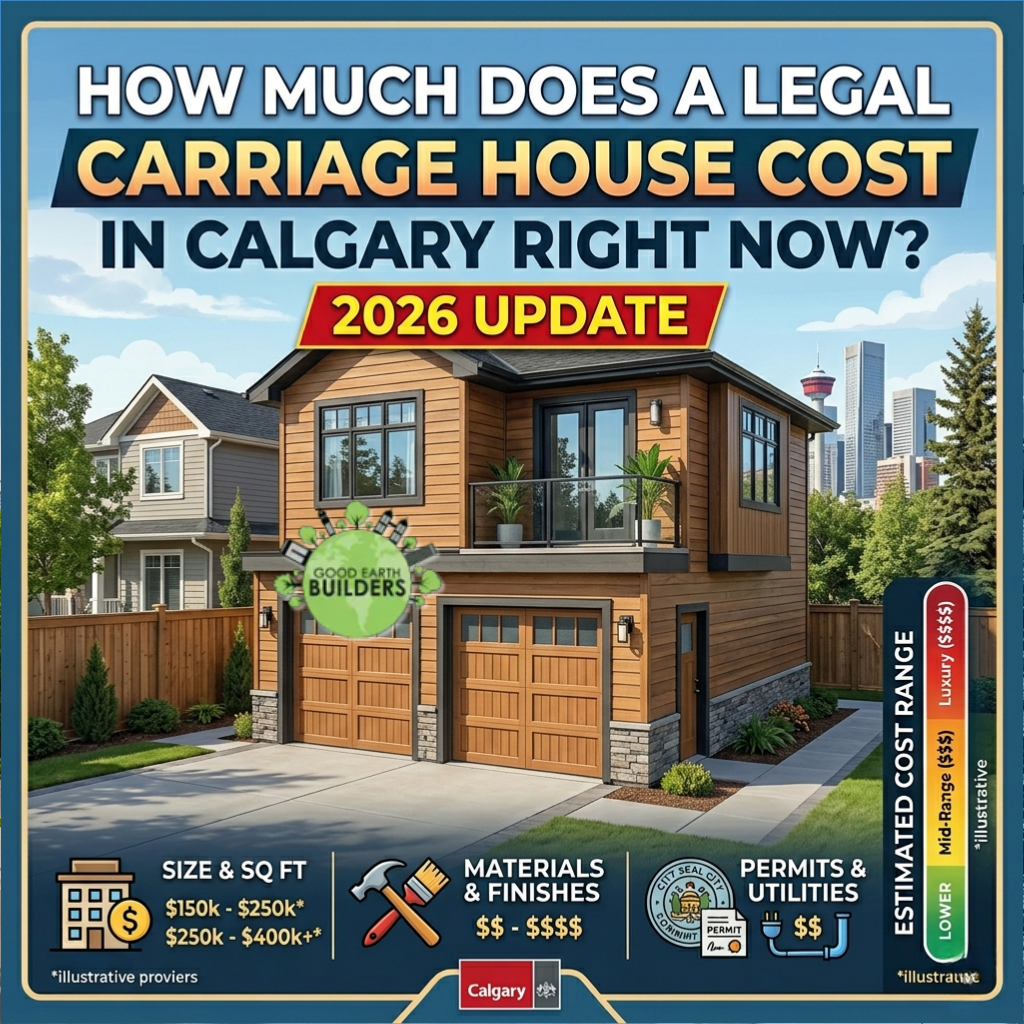
The answer is not a single number — it depends on size, design, location, materials, and how well you use available incentives. A typical legal carriage house in Calgary costs between $160,000 and $280,000 before rebates. After incentives, the net cost often drops to $110,000 – $200,000.
This detailed 2026 update breaks down the real costs in simple language. You’ll see a full cost breakdown, what drives prices up or down, how government programs can save you money, realistic timelines, return on investment examples, and practical tips to keep your project affordable. Whether you’re a homeowner planning for family use or an investor building for rental income, this guide will help you plan with realistic expectations.
Why Carriage House Costs Vary So Much in Calgary
No two carriage house projects are exactly the same. Several key factors affect the final price:
- Size: 600 sq ft vs 950 sq ft makes a big difference
- Location: Inner-city lots vs suburban backyards
- Design complexity: Simple box vs modern architectural style
- Finishes: Basic vs high-end materials
- Site conditions: Easy access vs challenging soil or utility issues
- Incentives used: Projects that stack rebates can save tens of thousands
In 2026, construction costs have stabilized compared to previous years, making planning more predictable. However, Calgary’s climate (hail, cold winters, freeze-thaw cycles) requires durable materials, which adds some cost but pays off in the long run.
Realistic Total Cost Breakdown for 2026
Here is a clear, average cost range for a typical 700–900 square foot legal carriage house in Calgary in 2026.
1. Design and Pre-Construction Costs
- Architectural design and engineering: $8,000 – $18,000
- Site survey and geotechnical report: $4,000 – $9,000
- Energy modeling (for rebates): $1,500 – $3,500
Subtotal: $13,500 – $30,500
2. Permits and City Fees
- Development permit: $2,000 – $5,000
- Building permit and inspections: $3,000 – $8,000
- Other municipal fees: $2,000 – $6,000
Subtotal: $7,000 – $19,000
3. Site Preparation and Foundation
- Demolition (if needed): $8,000 – $20,000
- Excavation and foundation: $15,000 – $35,000
- Utility connections and upgrades: $10,000 – $25,000
Subtotal: $33,000 – $80,000
4. Main Construction Costs
- Structural framing and roofing: $45,000 – $85,000
- Exterior finishes (siding, windows, doors): $25,000 – $55,000
- Interior finishes (floors, kitchen, bathroom): $35,000 – $70,000
- Mechanical systems (electrical, plumbing, HVAC): $25,000 – $50,000
Subtotal: $130,000 – $260,000
5. Landscaping and Final Site Work
- Driveway adjustments and parking: $8,000 – $18,000
- Yard restoration and fencing: $6,000 – $15,000
Subtotal: $14,000 – $33,000
Grand Total Before Incentives: $160,000 – $280,000 (most common range: $190,000 – $240,000)
After Incentives (Realistic Net Cost): $110,000 – $200,000
These numbers are based on typical 2026 market conditions for a well-built, code-compliant, energy-efficient carriage house.
How Incentives Reduce Your Net Cost in 2026
Government programs can make a huge difference. Many homeowners save $30,000 – $80,000+ by using them correctly.
- Clean Energy Improvement Program (CEIP): Up to 10% rebate + low-interest financing for energy upgrades
- CMHC Eco Improvement Refund: Up to 25% back on mortgage insurance premiums
- Secondary Suite Incentive Program: City grants up to $25,000
- GST Rebate: Partial rebate on new construction
- Provincial Programs: Additional support for energy-efficient or affordable suites
Stacking Example: A $220,000 project can realistically drop to $150,000 – $170,000 net after combining CEIP, CMHC, and city grants.
Factors That Increase or Decrease Costs
Costs Go Up When:
- The lot has poor access or challenging soil
- You choose luxury finishes or complex architecture
- Utility upgrades are needed
- Winter construction is required
Costs Go Down When:
- You use modular or prefab components
- You choose practical, durable materials suited to Calgary’s climate
- You apply for all available incentives early
- You work with experienced local builders
Return on Investment and Payback Period
A legal carriage house is often a strong financial investment.
- Rental Income: $1,500 – $2,500 per month is common
- Annual Net Cash Flow: $12,000 – $22,000 after expenses
- Property Value Increase: $150,000 – $350,000+
- Typical Payback Period: 6–10 years through rent alone
After the payback period, the suite provides ongoing income or valuable extra space for your family. Many homeowners report that their carriage house more than pays for itself over time.
Timeline: How Long Does It Take?
- Planning and design: 2–4 months
- Permitting (with Infill Fast Track): 3–6 months
- Construction: 6–9 months
- Total Timeline: 12–18 months from idea to finished suite
Starting early and preparing complete applications helps keep the project on schedule.
Common Cost Mistakes to Avoid
- Underestimating soft costs and permits
- Skipping energy modeling and missing rebates
- Choosing cheap materials that don’t hold up in Calgary weather
- Starting construction before all permits are approved
- Not budgeting a contingency (recommend 10–15%)
Avoiding these mistakes can easily save you $20,000 – $50,000 or more.
Real Calgary Carriage House Cost Examples (2025–2026)
- A Bowness homeowner built an 800 sq ft carriage house for $205,000 total. After incentives, net cost was around $148,000. It now rents for $2,100/month.
- A Killarney project with premium finishes cost $245,000 before rebates. With CEIP and CMHC support, the owner’s net investment dropped to $172,000.
These real examples show that costs are manageable when planned properly.
Final Thoughts
Building a legal carriage house in Calgary in 2026 is a significant but often very worthwhile investment. Total costs typically range from $160,000 to $280,000 before incentives, with most well-planned projects landing between $190,000 and $240,000. After taking advantage of CEIP rebates, CMHC refunds, city grants, and other supports, the net cost frequently falls to $110,000 – $200,000 — making it much more affordable than many people expect.
A carriage house offers more than just extra space. It can generate meaningful rental income, increase your property value substantially, provide flexible living options for family, and help address Calgary’s housing needs. With construction costs more stable in 2026 and incentives still available, this is one of the better times in recent years to consider adding a backyard suite.
Success depends on realistic budgeting, early planning, choosing durable materials suited to our climate, and working with professionals who understand the full process — from design and permitting to construction and incentives.
If you are thinking about building a legal carriage house and want clear, practical guidance on costs, design choices, incentives, timelines, and creating a high-quality suite that meets your goals, working with experienced local builders who have completed many carriage house projects can make the entire journey smoother and more successful.
Good Earth Builders, with over 23 years of experience in the Calgary market and 846 completed projects, has helped numerous homeowners design and build legal carriage houses that are both beautiful and practical. They understand current 2026 costs, city requirements, and how to maximize available incentives while delivering strong long-term value. Their commitment to planting 10 trees for every job also adds real environmental benefit to each project.
If you’re ready to explore adding a carriage house to your Calgary property, reaching out to a team like Good Earth Builders can give you realistic cost expectations and expert support to bring your vision to life.