Friday, February 27, 2026
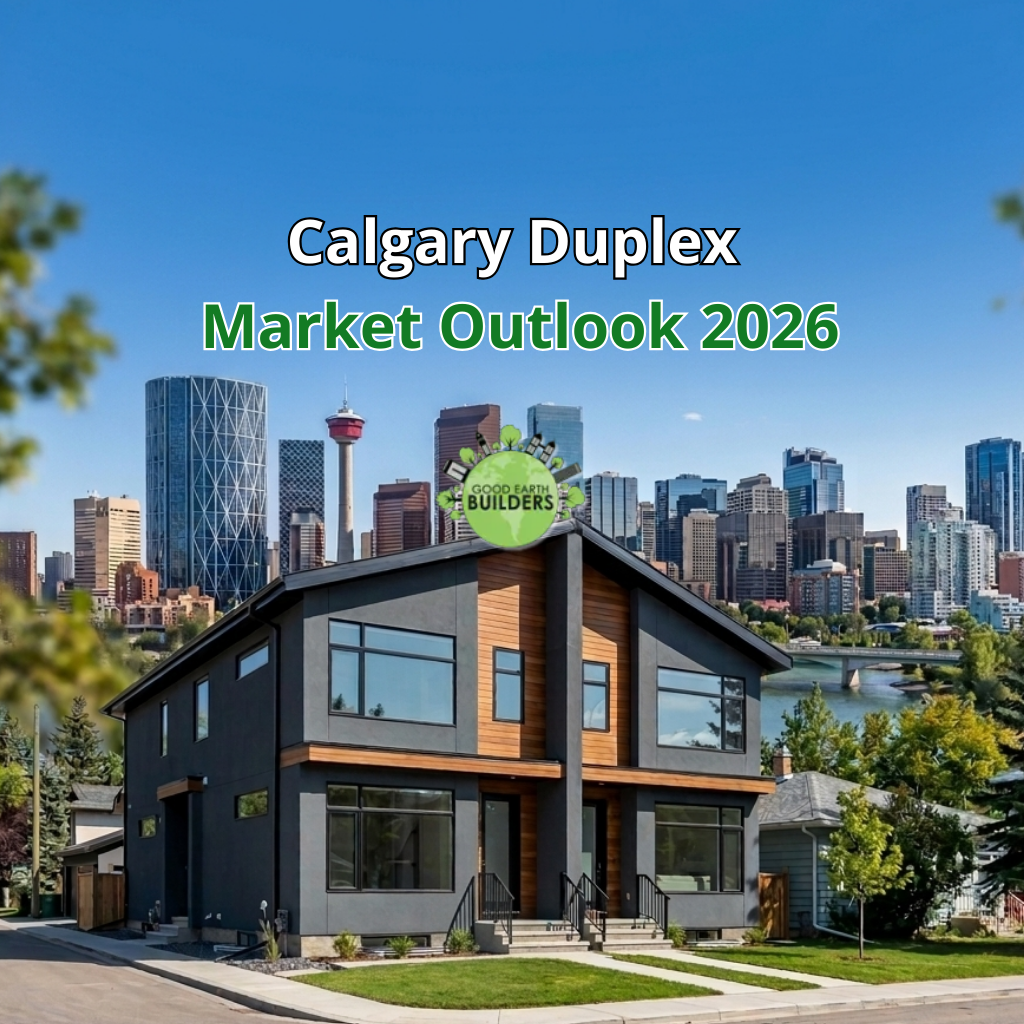
Calgary’s housing market continues to evolve in 2026, and duplexes are playing a bigger role than ever in the city’s urban infill story. A duplex is simply two housing units on one lot — often one main floor home with a legal basement suite, or two side-by-side units. They offer a practical way to add housing density without sprawling into new suburbs, while giving owners extra income or space for family.
With Calgary’s population still growing (though at a slightly slower pace than the peak years), rental vacancy rates hovering around 4–6%, and construction costs stabilizing after years of inflation, duplexes are attracting both homeowners and investors. Many people are choosing them as a first step into real estate because they are more affordable to build or buy than a single-family home, yet they provide strong rental income and long-term appreciation potential.
This detailed outlook looks at the key factors shaping the Calgary duplex market in 2026: current demand, rental rates, price appreciation, how duplexes compare to other infill types like row townhomes or 4-plexes, the role of government incentives, and what the year ahead might bring. Whether you’re thinking about buying your first duplex, building one as an investor, or simply want to understand the market before making a move, this guide gives you clear, straightforward information based on the latest trends.
Current State of the Calgary Duplex Market in 2026
Calgary’s overall housing market in 2026 is more balanced than the frantic growth of 2022–2024. Home sales have slowed slightly, inventory has increased, and price growth is modest (around 2–4% annually in many neighborhoods). However, duplexes remain popular because they serve two important needs at once: they provide affordable ownership for buyers and much-needed rental supply for tenants.
According to local real estate data and CMHC reports, duplexes make up a growing share of infill activity in mature neighborhoods. Areas like Bowness, Killarney, Highland Park, Tuxedo Park, and Forest Lawn are seeing the most activity. These communities already have good schools, parks, and transit, so adding a duplex fits naturally without changing the neighborhood feel too much.
The big driver is simple: many families and young professionals want more space than a condo but can’t afford a full detached house. A duplex lets them live in one unit and rent the other, helping cover the mortgage. For investors, duplexes offer steady cash flow with lower vacancy risk than single-family rentals because the owner-occupied side is always “rented.”
Rental Demand for Duplexes in Calgary 2026
Rental demand for duplex units remains strong in 2026. With average one-bedroom rents around $1,800–$2,200 and two-bedroom units at $2,200–$2,800 per month, duplexes with legal basement suites are especially attractive. Many landlords report 95%+ occupancy rates because tenants like the privacy of a separate entrance and small yard compared to apartment living.
Key reasons for strong demand:
- Young professionals and couples who want more space than a condo but aren’t ready for a full house.
- Families needing affordable rentals close to schools and transit.
- Multi-generational households where parents or adult children live in the suite.
In neighborhoods like Highland Park and Killarney, duplex rentals often lease within 10–20 days of listing. The legal suite option is a big plus — it gives landlords extra income while keeping the main unit for themselves or another tenant.
Overall rental vacancy for multi-family in Calgary is expected to stay low through 2026 as new supply (mostly larger apartments) takes time to come online. This supports steady rent growth of 2–4% for well-maintained duplexes.
Average Rents and Cash Flow Potential
Here’s what landlords can expect in 2026 for a typical Calgary duplex:
- Main floor unit (3-bed + garage): $2,400–$3,000/month
- Legal basement suite (1–2 bed): $1,500–$2,200/month
- Total monthly gross rent: $3,900–$5,200
After typical expenses (property taxes, insurance, maintenance, 5% vacancy allowance), net cash flow is often $1,200–$2,000 per month for a well-located duplex. That translates to a cash-on-cash return of 6–9% for investors who put down 25–30% equity — very competitive compared to other real estate options.
For owner-occupiers who live in one side and rent the other, the rental income can cover 40–70% of the mortgage, making homeownership more affordable.
Price Appreciation Outlook for Duplexes in 2026
Duplex properties in Calgary have shown steady appreciation over the past decade, and 2026 is expected to continue that trend at a moderate pace.
- Average duplex price range: $650,000–$950,000 (depending on neighborhood and condition)
- Expected appreciation: 3–6% in strong infill areas, 2–4% city-wide
- Long-term drivers: Limited land supply in mature neighborhoods, continued population growth, and increasing preference for low-maintenance, income-producing properties
In neighborhoods like Bowness or Highland Park, duplexes often sell for a premium because they offer both living space and income potential. Buyers are willing to pay more for a turnkey duplex with legal suites and modern upgrades.
Compared to single-family homes, duplexes can appreciate faster in percentage terms because the rental income supports higher purchase prices. Over 5–10 years, many Calgary duplex owners see total returns (appreciation + rental income) of 8–12% annually when leveraged properly.
How Duplexes Compare to Other Infill Types in 2026
Many investors compare duplexes with row townhomes and 4-plexes when planning infill projects. Here’s a quick look at how duplexes stack up:
- Duplex vs Row Townhomes: Duplexes are simpler and lower risk for beginners. Row townhomes give higher total profit per lot but require more capital and longer build times.
- Duplex vs 4-Plex: 4-plexes offer higher rental yields (7–9%) but come with more zoning and financing complexity. Duplexes are easier to finance and sell quickly.
In 2026, duplexes remain the most accessible entry point for new investors while still delivering solid returns.
Government Incentives That Support Duplex Investment in 2026
Several programs make duplexes more profitable:
- CMHC Eco Improvement Refund: Up to 25% back on mortgage insurance premiums when you add energy-efficient features like heat pumps or better insulation.
- Calgary Clean Energy Improvement Program (CEIP): Up to 10% rebate on energy upgrades, repaid through property taxes.
- Infill Fast Track Program: Faster permitting for duplex projects that meet city guidelines, saving time and money.
- GST/HST New Housing Rebate: Available when building new duplexes with legal suites.
These incentives can reduce your effective cost by $15,000–$40,000 on a typical duplex project, directly improving your ROI.
Risks and Challenges in the 2026 Duplex Market
No investment is risk-free. Here are the main things to watch:
- Interest Rate Sensitivity: Higher rates can slow buyer demand and affect resale speed.
- Construction Cost Fluctuations: Even with stabilization, unexpected increases in labor or materials can squeeze margins.
- Zoning and Permitting Delays: Some neighborhoods have stricter rules for secondary suites.
- Market Cooling: If inventory keeps rising, appreciation may slow in some areas.
Smart investors mitigate these risks by choosing established neighborhoods, building energy-efficient units to qualify for incentives, and keeping a 10–15% contingency in their budgets.
Real-World Duplex Performance in Calgary
Recent examples show strong results:
- A duplex in Killarney built in 2025 for $680,000 total cost is now renting for $5,200/month combined (8.2% gross yield).
- An infill duplex in Highland Park purchased and renovated in 2024 sold in early 2026 for a 24% gain after adding a legal suite and energy upgrades.
These cases highlight how duplexes can deliver both cash flow and capital appreciation when located well and managed properly.
Outlook for the Calgary Duplex Market Through 2026 and Beyond
Looking ahead, the duplex market in Calgary is expected to remain solid. Population growth, even if slower than previous years, will continue to support rental demand. Stabilizing construction costs and ongoing government incentives for infill and energy efficiency should keep projects viable. Long-term appreciation is likely to average 3–5% annually in well-chosen neighborhoods as the city continues to densify.
For investors, duplexes offer a practical middle ground between single-family homes and larger multi-family buildings. They provide income, tax advantages, and a hedge against inflation while being easier to manage than bigger properties.
The combination of steady demand, supportive incentives, and the ability to add value through legal suites and energy upgrades makes 2026 a promising year for anyone considering a duplex investment in Calgary.
If you’re exploring the possibility of building or investing in a duplex and want expert guidance on design, costs, incentives, and timelines, experienced local builders who understand Calgary’s infill market can help turn your plans into reality.
Good Earth Builders, with over 23 years of experience in Calgary and 846 completed projects, specializes in efficient, high-quality infill developments including duplexes and small multi-family homes. Their commitment to planting 10 trees per job also adds real environmental value to every project. If you’re ready to take the next step, reaching out to a team like Good Earth Builders can give you the local expertise and practical support you need for a successful duplex project in 2026.