Friday, March 27, 2026
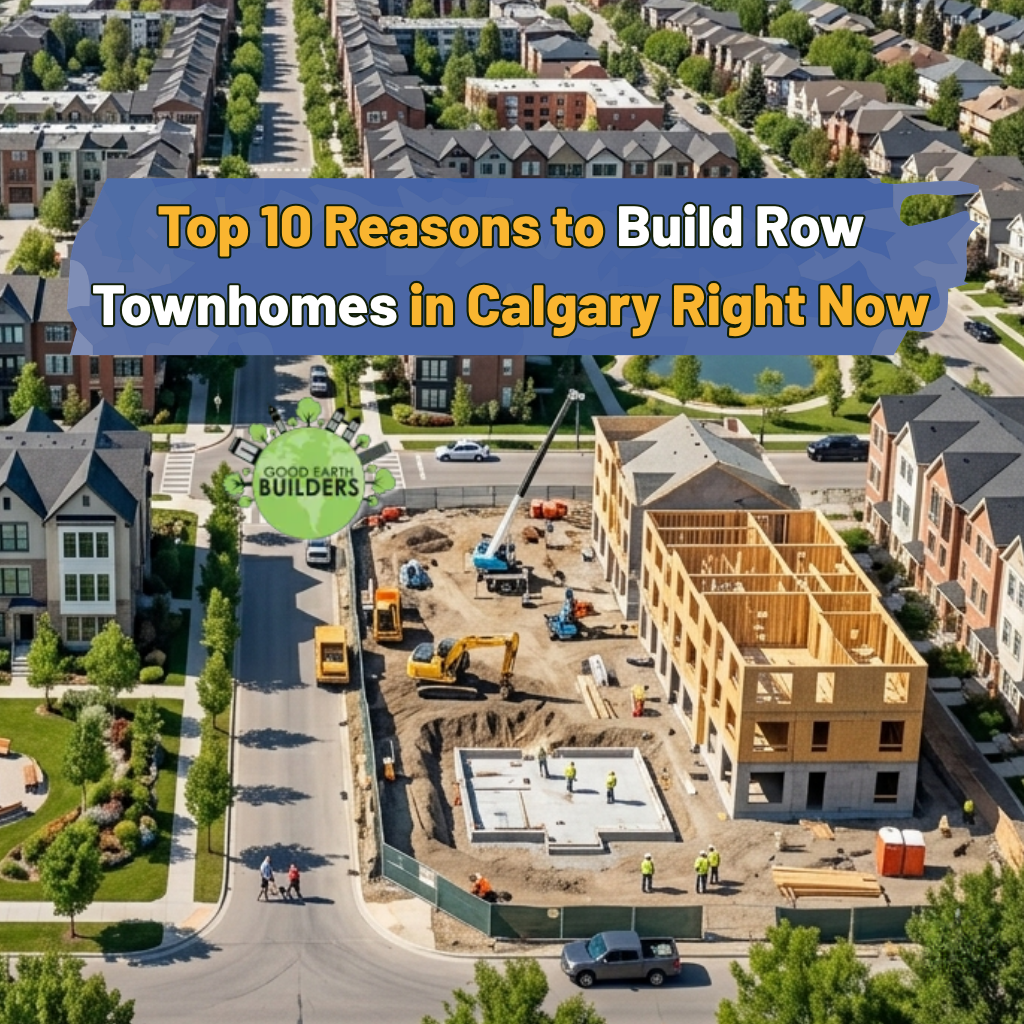
Row townhomes — attached homes in a row of 3 to 8 units with individual entrances and small private yards — have become one of the smartest choices for developers and investors in Calgary. They use land more efficiently than single-family homes or duplexes, offer family-sized living space without condo fees, and deliver excellent returns through rental income or quick resale.
In 2026, with construction costs stabilizing after years of big increases, rental demand staying solid in many neighborhoods, and the City of Calgary still supporting infill development, row townhomes stand out as a practical and profitable option. They help meet the need for “missing middle” housing — homes that are more affordable and denser than detached houses but simpler than large apartment buildings.
This guide explains the top 10 reasons why building row townhomes makes excellent sense in Calgary right now. Each reason includes clear explanations, real numbers where possible, and practical insights so you can see the full picture. Whether you’re an experienced developer or someone considering your first multi-unit project, these points will help you understand why row townhomes deserve serious consideration in 2026.
Reason 1: Strong Rental Yields and Steady Cash Flow
One of the biggest attractions of row townhomes is their ability to generate reliable rental income.
In 2026, a typical 3-bedroom row townhome unit in good Calgary neighborhoods rents for $2,500 to $3,500 per month. For a 4- to 6-unit project, that can mean total monthly gross rent of $10,000 to $21,000.
After normal expenses (property taxes, insurance, maintenance, and a small vacancy allowance), many projects achieve net yields of 6–8%. That is competitive and often better than single-family rentals or condos. Legal basement suites in some units can add another 20–30% to the income.
Why is demand strong? Young professionals, small families, and people who want more space than a condo but can’t afford a full detached house are actively looking for these units. In neighborhoods with good transit, schools, and parks, row townhomes lease quickly — often within 10–20 days.
For investors who want to hold the property, this cash flow provides steady returns and helps cover mortgage payments. For those who plan to sell, strong rental history makes the project more attractive to buyers.
Reason 2: Excellent Profit Margins on Sale (20–32%)
Row townhomes frequently deliver strong margins when sold.
A typical 4- to 6-unit row townhome project might have total costs (land + construction + soft costs) of $1.3 million to $2.5 million. Individual units often sell for $450,000 to $650,000 each in 2026, depending on location and finishes.
This can translate into gross profit margins of 20–32% after all costs — sometimes higher when incentives are stacked and energy-efficient features are included. Many developers sell 70–80% of the units and keep one or two for ongoing rental income, creating a balanced strategy.
Compared to larger apartment buildings, row townhomes have lower risk and shorter timelines, which helps protect margins. Compared to single-family infill, they spread land costs across more units, improving overall profitability.
Reason 3: Stabilizing Construction Costs Make 2026 a Good Time to Build
After several years of sharp increases, construction costs in Calgary are stabilizing in 2026.
Material prices for lumber are mostly flat, steel increases are modest (0–3%), and labor availability has improved slightly with unemployment around 4.7%. Overall inflation for construction is forecast at 2–4% — much more predictable than the double-digit swings seen earlier in the decade.
This stability reduces risk for developers. Budgets are easier to manage, and there is less chance of nasty surprises midway through the project. Builders can lock in prices with suppliers more confidently, and the overall cost per unit for row townhomes remains reasonable ($350,000–$420,000 range in many cases).
When costs are predictable, profit margins become more reliable — one of the key reasons many developers are moving forward with row townhome projects right now.
Reason 4: Strong Demand from Buyers and Renters
Calgary’s population growth, even if slower than peak years, continues to support housing demand. Families and young professionals want more space than condos offer but at a more affordable price than detached homes. Row townhomes fill that gap perfectly.
In 2026, many buyers prefer ground-oriented housing with small yards and no condo fees. Renters like the privacy and extra space compared to apartments. Neighborhoods with good access to transit, schools, and parks see especially fast absorption.
This demand helps projects lease or sell quickly, reducing holding costs and risk. Row townhomes often sell 20–30% faster than some other housing types in balanced market conditions.
Reason 5: Excellent Land Use Efficiency on Infill Lots
Land is one of the biggest expenses in Calgary infill development. Row townhomes make excellent use of standard or combined lots (typically 100–150 ft wide).
Instead of building just one or two units, you can fit 4–6 (or more) revenue-generating units on the same footprint. This spreads the high cost of land across more units, improving per-unit economics dramatically.
In mature neighborhoods where large lots are scarce, this density advantage is a major reason row townhomes outperform duplexes or single-family rebuilds on the same property.
Reason 6: Access to Valuable Government Incentives and Fast-Track Programs
Calgary and senior governments offer several programs that directly support row townhome development:
- Infill Fast Track Program: Speeds up permitting, often cutting approval time from 8–12 months to 3–6 months and saving significant holding costs.
- Clean Energy Improvement Program (CEIP): Up to 10% rebates on energy-efficient features like insulation, heat pumps, and solar-ready designs.
- CMHC Eco Improvement Refund: Up to 25% back on mortgage insurance premiums for qualifying green upgrades.
- Downtown Development Incentive Program (DIP) and other grants: Cash incentives for projects with affordable components or in targeted areas.
- GST Rebate: Available for new rental or ownership units.
When stacked correctly, these incentives can reduce effective project costs by 10–25% or more. Many developers include some energy-efficient or affordable units specifically to unlock deeper funding while keeping overall profitability strong.
Reason 7: Lower Risk Compared to Larger Multi-Family Projects
Building a 20- or 50-unit apartment building requires massive capital, complex condo corporations, long lease-up periods, and higher risk if the market shifts.
Row townhomes are much more manageable. Smaller scale means shorter construction timelines, easier financing, simpler strata titling if selling individually, and quicker lease-up or sale. If you decide to hold some units for rental, the cash flow starts sooner.
This lower risk profile makes row townhomes especially appealing in a 2026 market that is more balanced than the boom years.
Reason 8: Flexible Exit Strategies (Sell, Hold, or Hybrid)
Row townhomes give developers excellent flexibility:
- Sell all units for quick capital and profit.
- Hold the entire building for long-term rental income.
- Sell most units and keep one or two for cash flow (a popular hybrid approach).
This flexibility lets you adapt to market conditions. In a strong sales market, you can exit quickly. In a rental-friendly environment, you can generate ongoing income. Many investors use row townhomes to build a diversified portfolio with both capital gains and cash flow.
Reason 9: Appeal to a Wide Range of Buyers and Tenants
Row townhomes attract families who want more space and a small yard without the maintenance of a full detached house. They also appeal to young professionals and empty-nesters who like the modern layouts and lower costs compared to larger homes.
In 2026, with many buyers seeking affordable ownership options and renters looking for privacy and extra space, row townhomes have broad market appeal. This helps with faster sales or leasing and reduces vacancy risk.
Reason 10: Strong Long-Term Appreciation and Future-Proofing Potential
Well-located row townhomes in Calgary have shown solid appreciation over time. As the city continues to grow and encourage gentle density in mature neighborhoods, properties with row townhomes often gain value faster than some other housing types.
Adding energy-efficient features (heat pumps, good insulation, solar-ready designs) not only qualifies for incentives today but also future-proofs the building against rising energy costs and stricter building codes expected in coming years.
In a market where affordability remains a challenge, row townhomes that offer good value, low maintenance, and income potential are positioned for steady long-term growth.
Final Thoughts: Why Row Townhomes Make Sense Right Now in Calgary
When you look at the full picture — stabilizing construction costs, strong rental demand, solid profit margins, valuable government incentives, land-use efficiency, lower risk, flexible strategies, broad appeal, and good long-term appreciation — it’s easy to see why row townhomes are one of the smartest infill choices available to developers and investors in Calgary in 2026.
They help address the city’s need for “missing middle” housing while offering practical financial benefits for those who build them. In a more balanced market, projects that are well-planned, efficiently built, and thoughtfully located continue to perform well.
Of course, success depends on choosing the right neighborhood, designing with buyer and tenant needs in mind, managing costs carefully, and taking full advantage of available incentives and fast-track programs. Working with experienced local professionals who understand Calgary’s infill rules, zoning, and market realities can make a significant difference in turning a good idea into a successful project.
Good Earth Builders, with over 23 years of experience in the Calgary market and 846 completed projects, has built many successful row townhome communities across a variety of neighborhoods. They specialize in efficient, high-quality infill and attached housing, and they are known for helping developers navigate permits, maximize incentives, and deliver projects on time and on budget. Their commitment to planting 10 trees for every job also adds real environmental value to each development.
If you’re thinking about building row townhomes in Calgary in 2026 and want practical guidance on site selection, design, costs, incentives, and timelines, reaching out to a team like Good Earth Builders can help you move forward with confidence and a clear plan for strong results.