
Friday, December 19, 2025
Calgary stands at the forefront of Canada’s push toward sustainable living, balancing rapid urban growth with ambitious climate goals. As of late 2025, the city faces a significant housing shortage while committing to net-zero greenhouse gas emissions by 2050. Buildings contribute heavily to emissions—around 60% in Calgary—through daily energy use and the “embodied carbon” locked in materials like concrete and steel. These traditional options release massive CO2 during production, but innovative alternatives like mass timber and low-carbon materials offer a greener path.
Mass timber—engineered wood products such as cross-laminated timber (CLT) and glued laminated timber (glulam)—comes from renewable forests and actively stores carbon. Paired with options like hempcrete, recycled steel, or low-carbon concrete, these materials enable faster, more resilient construction suited to Alberta’s extreme weather: harsh winters, hailstorms, and increasing heat. With building codes evolving to allow taller wood structures (up to 12 storeys in Alberta) and incentives growing into 2026, these approaches support net-zero homes, offices, and infill projects in neighborhoods like Bowness, Killarney, or Quarry Park.
This in-depth guide explains these materials in straightforward language, highlights their role in Calgary’s climate strategy, details benefits and challenges, showcases real-world examples from Alberta and Canada, discusses incentives, and previews 2026 trends. Whether you’re considering a custom home build, renovation, or multi-family development, understanding these options empowers smarter, more sustainable choices.

What Is Mass Timber? A Simple Guide to Engineered Wood
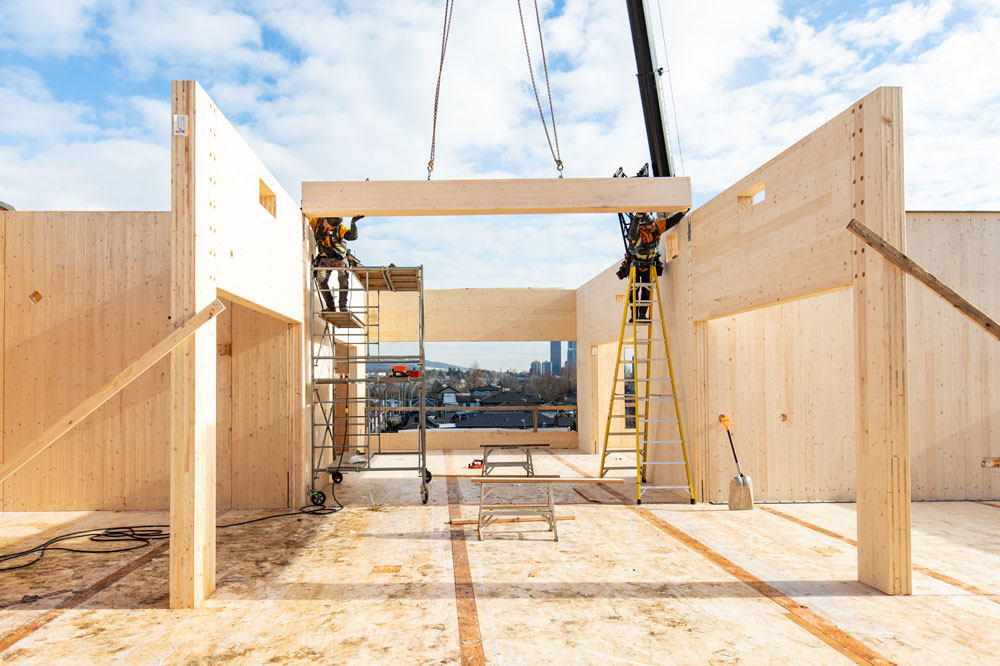
Mass timber transforms ordinary wood into high-performance building blocks through engineering. Trees from sustainably managed forests (often in Alberta or British Columbia) provide the raw material, which is layered and bonded for exceptional strength and stability.
Key types include:
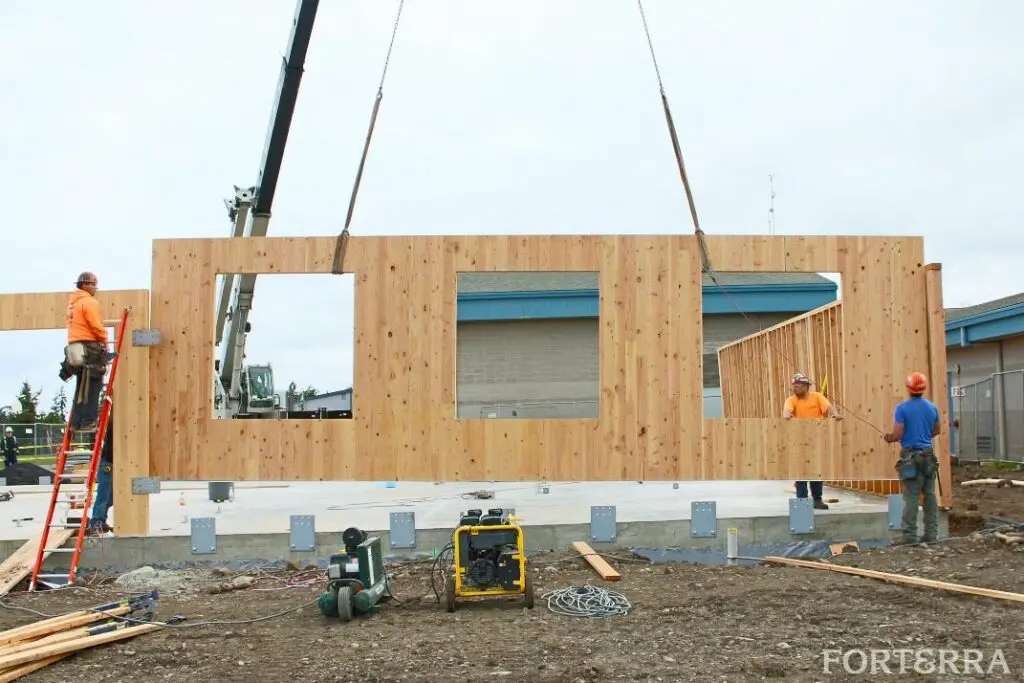
- Cross-Laminated Timber (CLT) → Panels formed by stacking lumber layers at right angles and gluing them under pressure. This creates large, solid slabs for walls, floors, and roofs. CLT resists warping, spans wide openings, and provides natural insulation through trapped air pockets—ideal for Calgary’s temperature swings.

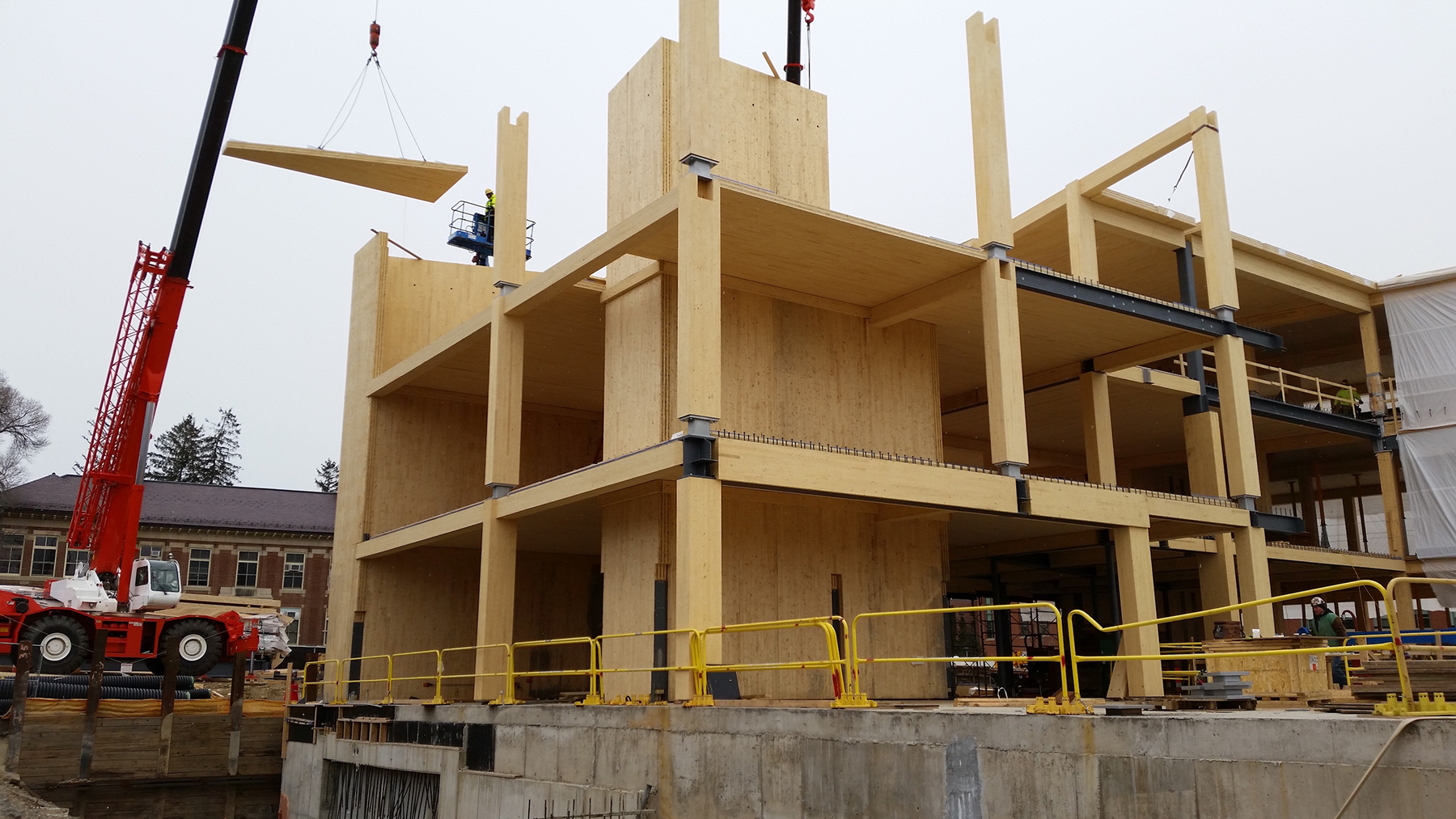
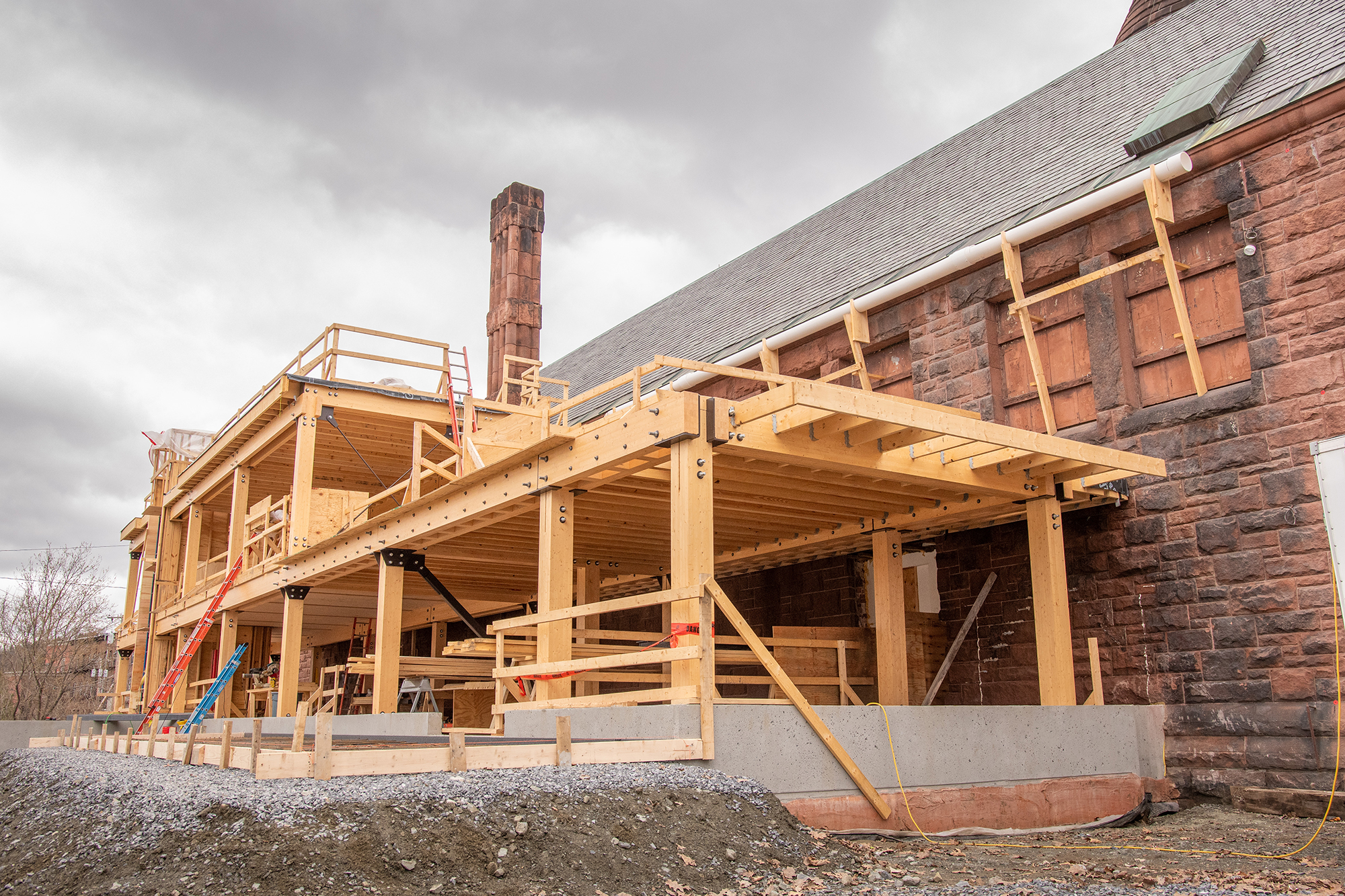
- Glued Laminated Timber (Glulam) → Long beams or columns made by gluing smaller lumber pieces. These allow curved or arched designs and support heavy loads in open spaces like gyms or atriums.
- Nail-Laminated Timber (NLT) or Dowel-Laminated Timber (DLT) → Simpler options using nails or wooden dowels. They’re cost-effective for floors and often avoid glues for even lower environmental impact.
The magic lies in carbon sequestration: Growing trees absorb CO2, and mass timber locks it away for the building’s lifespan—typically 50-100 years or longer. One cubic meter stores about 1 ton of CO2. Unlike concrete (which emits heavily during cement production), mass timber often results in a net carbon-negative footprint when factoring in forest regrowth.
In practice, mass timber arrives pre-cut from factories, speeding assembly and reducing on-site waste. It’s lighter than concrete, easing transport and allowing shallower foundations—a boon for Calgary’s variable soil conditions. Exposed wood interiors add warmth and natural beauty, promoting “biophilic design” that connects people to nature for better well-being.
Hybrid uses combine mass timber with other materials for optimal performance, like wood frames with steel connections for tall buildings.
Other Low-Carbon Materials Complementing Mass Timber
Mass timber shines brightest when paired with complementary low-carbon options, creating holistic systems that minimize emissions across the board.
Notable examples:
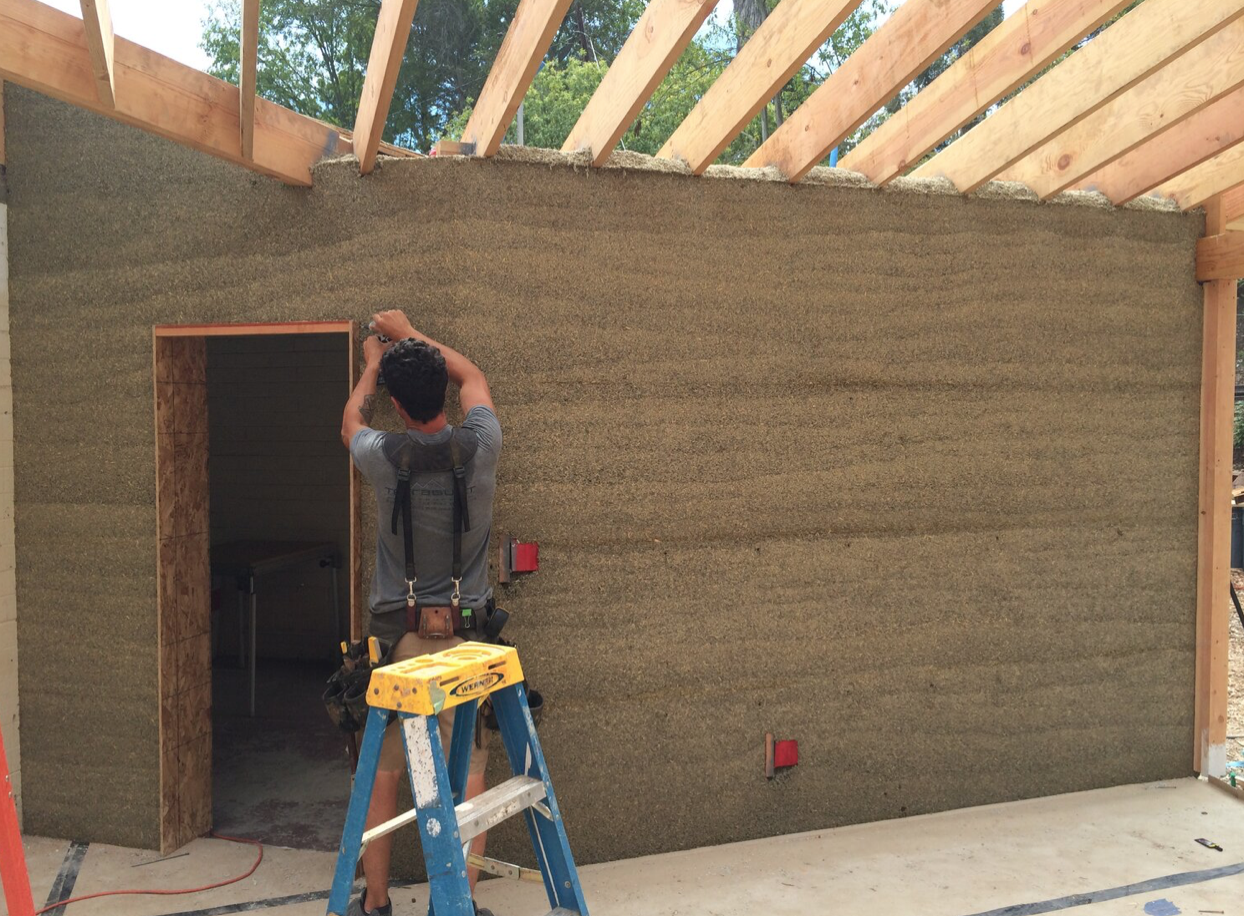
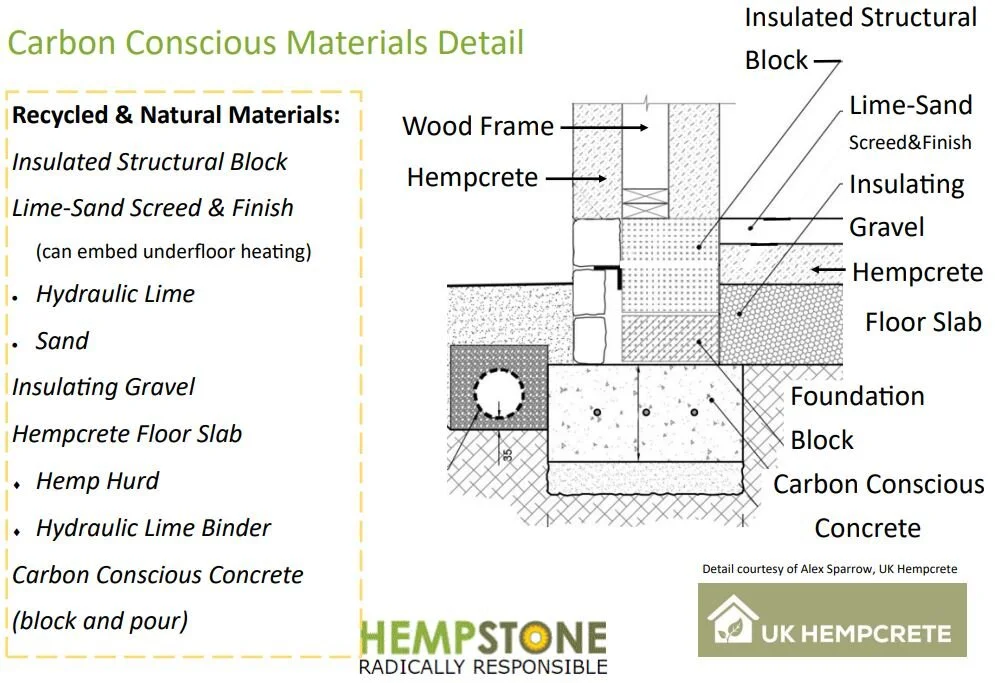
- Hempcrete — A mix of hemp hurds (plant stalks) and lime binder forms lightweight blocks or cast walls. It insulates exceptionally, regulates humidity (preventing mold in damp basements), and continues absorbing CO2 as it cures. Hemp grows quickly with minimal water or pesticides, making it highly renewable.

- Recycled Steel — Reusing scrap steel slashes production emissions by 60-80%. It provides tensile strength where wood excels in compression, perfect for hybrid frames resistant to hail or wind.
- Low-Carbon Concrete Alternatives — Incorporate fly ash, slag, or captured CO2 (via technologies like CarbonCure) to reduce cement’s impact by 30-50%. These suit foundations in flood-prone areas.
- Bio-Based Insulation — Materials like sheep’s wool, cork, cellulose (recycled paper), or mycelium (mushroom roots) replace petroleum-based foams. They offer excellent thermal performance and breathability.
- Additional Innovations — Bamboo for flooring, straw bales for infill walls, or reclaimed wood for accents—all close material loops.
These combinations enable “circular” design: Materials that are reusable, recyclable, or biodegradable at end-of-life. Life-cycle assessments show hybrids often outperform single-material builds in total emissions.
Why These Materials Matter for Calgary’s Net-Zero Goals
Calgary’s Climate Strategy—Pathways to 2050, updated through 2025—targets net-zero by balancing emissions with removals. Buildings drive much of this, so reducing embodied and operational carbon is priority. The 2023-2026 Implementation Plan emphasizes low-emission materials and resilient designs.
Mass timber and low-carbon options align perfectly:
- Embodied Carbon Reduction → Up to 50% lower than concrete/steel equivalents, with wood storing carbon.
- Operational Efficiency → Better insulation and airtightness cut heating needs in cold winters, supporting net-zero ready homes.
- Climate Resilience → Fire performance (wood chars protectively), seismic flexibility, and moisture management suit Alberta’s risks.
- Economic and Social Benefits → Support forestry jobs, improve indoor health (natural materials reduce VOCs), and enable affordable infill for housing needs.
Scaling these could offset millions of tons of CO2 nationally while creating vibrant, walkable communities.
Current Trends and Real Examples in Calgary and Alberta
Canada leads globally with nearly 700 mass timber buildings completed and 140+ in progress as of 2025. Alberta permits 12-storey encapsulated mass timber, fueling growth.
Standout Calgary-area projects:
- Remington YMCA in Quarry Park → 94,000 sq ft recreation center with prominent mass timber elements, awarded in 2025 for innovation.
- ATCO Commercial Centre → Iconic leaf-shaped facility using glulam and CLT, LEED Gold certified, storing hundreds of tons of CO2.
- Sam Centre → Pitched-roof cultural space honored for Alberta-inspired design.
- Freedom Mobile Arch (opening 2026) → Arena with dramatic mass timber roof.
Suppliers like Western Archrib (Alberta-based) and Beam Craft drive local production. Trends include hybrids, prefab integration, and mid-rise residential.
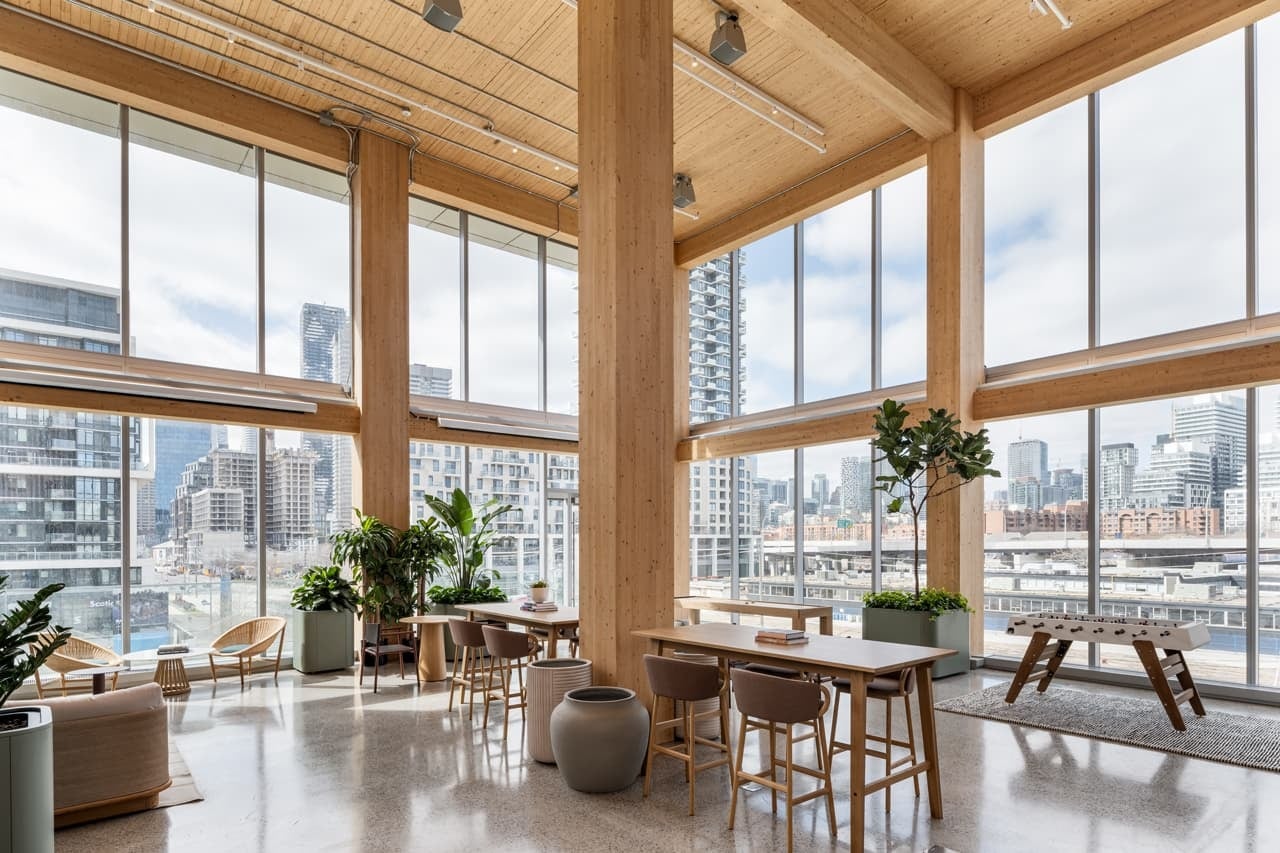

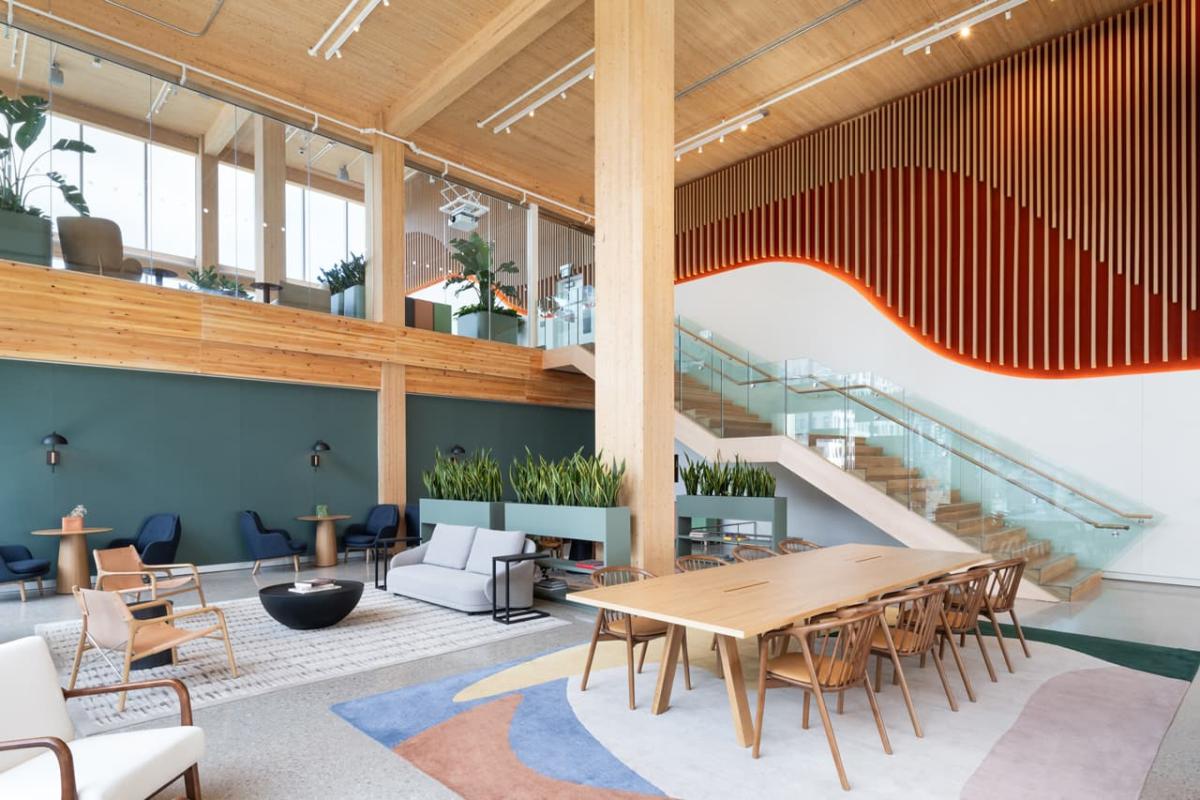
Nationally, projects like Toronto’s tall wood towers inspire Alberta’s potential.
Challenges: Costs, Supply, and Regulations
Adoption faces hurdles:
- Higher Initial Costs → 5-15% premium for specialized engineering, though offset by speed and energy savings.
- Supply Chain → Growing but needs more mills; insurance can be pricier due to limited data.
- Perception and Skills → Myths about fire (addressed by encapsulation) or longevity; workforce training required.
- Moisture Management → Critical during construction in wet climates.
Solutions emerge through research, code updates, and insurance action plans.
Incentives and Support for 2026 Projects
Support accelerates adoption:
- Calgary’s Green Buildings Priority Stream → Fast-tracks permits for net-zero or high-performance designs.
- Federal Programs → Canada Greener Homes Grant ($5K+ for retrofits), Low Carbon Economy Fund.
- Alberta Initiatives → Emissions Reduction Alberta funding for advanced materials; Industrial Energy Efficiency grants.
- Broader Support → CMHC green financing, provincial circular economy investments.
These often cover audits, upgrades, or incremental costs, improving ROI.
Looking Ahead: 2026 and Beyond
2026 promises acceleration: New factories, taller code allowances (potentially 18 storeys), and federal task forces promoting mass timber. Trends include robotic prefab, full hybrids with renewables, and circular recycling. Alberta’s forest sector transformation supports this, creating jobs while cutting emissions.
By mid-century, these materials could dominate, making net-zero standard and resilient against climate shifts.
Building a Sustainable Calgary: Final Thoughts
Mass timber and low-carbon materials provide practical, beautiful solutions for greener building—storing carbon, saving energy, and enhancing lives.
As interest grows, experienced local teams can navigate options effectively. Good Earth Builders, with over 23 years in Calgary and 846 completed projects, emphasizes sustainable, energy-efficient designs alongside commitments like planting 10 trees per job. Reach out for insights on integrating these materials into your next project.