Friday, June 26, 2026
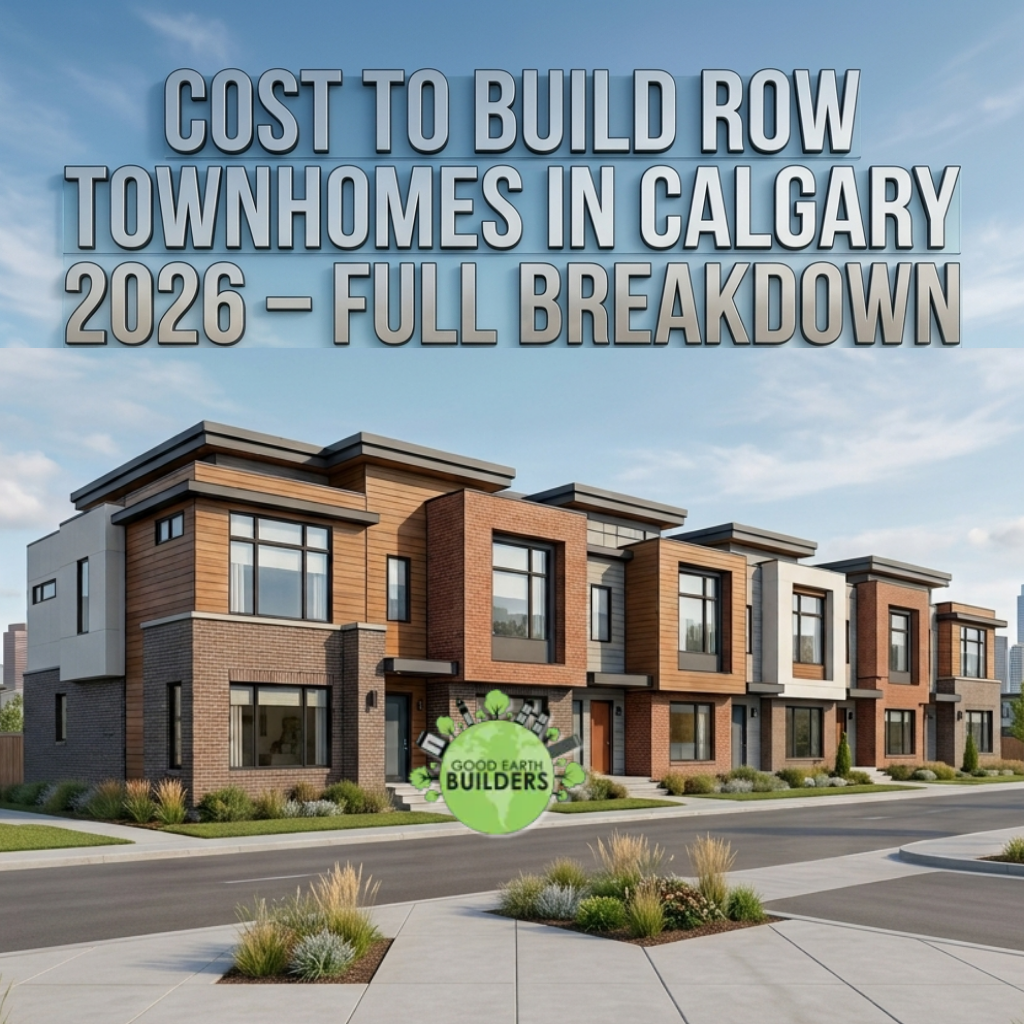
Row townhomes are one of the most popular and practical forms of infill housing in Calgary. These attached homes, typically built in rows of 3 to 8 units with individual entrances and small private yards, offer a smart balance between density and livability. They appeal to families who want more space than a condo but don’t need a full detached house, and they provide developers and investors with good profit potential through sales or rental income.
In 2026, many people are asking the same important question: How much does it really cost to build row townhomes in Calgary? The answer is not a single number — it depends on location, number of units, design choices, material quality, and how well you use available incentives. A typical 4- to 6-unit row townhome project usually costs between $2.2 million and $3.8 million total, including land.
This comprehensive guide breaks down all the costs in simple, easy-to-understand language. You’ll see realistic 2026 numbers, what each part of the budget covers, factors that raise or lower expenses, how incentives can save you money, timelines, and practical tips to keep your project affordable and profitable. Whether you are a first-time developer, an investor, or simply curious about the numbers, this article will give you a clear picture.
Why Understanding Costs Is Essential in 2026
Building row townhomes requires significant upfront investment. Knowing the full cost picture helps you:
- Create realistic budgets and pro formas
- Choose the right neighborhoods and lot sizes
- Decide on design features that offer good value
- Take full advantage of government incentives
- Avoid unpleasant financial surprises during construction
In 2026, construction costs have become more predictable after years of sharp increases. Material prices for lumber and steel are relatively stable, labor is more available, and the city continues to support infill projects through programs like Infill Fast Track and energy rebates. This makes planning more reliable, but careful budgeting is still critical.
Typical Project Size and Overall Cost Range
Most row townhome projects in Calgary are built with 4 to 6 units. Larger rows of 8+ units are possible but often need bigger lots or combined parcels.
Realistic Total Cost Ranges (2026):
- Small 4-unit project: $1.8M – $2.6M
- Mid-size 5-6 unit project: $2.3M – $3.5M
- Larger or premium 6-8 unit project: $3.2M – $4.8M+
These totals include land, construction, soft costs, and basic site work. Per-unit costs usually fall between $380,000 and $520,000, depending on finishes and location.
Detailed Cost Breakdown for Row Townhomes in 2026
1. Land Acquisition
Land is often the single largest expense in row townhome projects.
- Standard infill lot (100–150 ft wide): $650,000 – $1.1M
- Two combined lots for larger rows: $900,000 – $1.6M
- Demolition and site clearing: $20,000 – $50,000
Tip: Choosing lots in neighborhoods like Highland Park, Forest Lawn, or Killarney often gives the best balance of price and demand. Premium lots near transit or parks cost more but can support higher sale prices.
2. Construction (Hard Costs)
This is the actual cost of building the structures.
- Base construction cost: $350 – $480 per sq ft
- For a typical 5-unit row townhome (7,000–10,000 total sq ft): $1.4M – $2.4M
Major Construction Components:
- Foundation and structural framing: $400K – $700K
- Exterior envelope (roofing, siding, windows): $250K – $450K
- Mechanical systems (electrical, plumbing, HVAC): $200K – $350K
- Interior finishes (kitchens, bathrooms, flooring): $300K – $500K
Energy-efficient upgrades like cold-climate heat pumps, high insulation, and triple-pane windows typically add $80K–$180K but often qualify for rebates that offset much of this cost.
3. Soft Costs
Soft costs are frequently underestimated and can represent 20–30% of the total budget.
- Architectural design and engineering: $80,000 – $160,000
- Permits, development fees, and impact charges: $50,000 – $110,000
- Legal, surveys, insurance, and consulting: $40,000 – $90,000
- Financing fees and interest during construction: $60,000 – $150,000
Total Soft Costs: $230,000 – $510,000
4. Site Work and Landscaping
- Driveways, parking, and grading: $40,000 – $90,000
- Landscaping, fencing, and site restoration: $30,000 – $70,000
Grand Total Realistic Cost: $2.2M – $3.8M for a typical 5–6 unit row townhome project in 2026.
How Incentives and Rebates Reduce Your Net Cost
Government programs can significantly improve your project economics:
- Infill Fast Track: Faster permitting saves months of holding costs
- CEIP (Clean Energy Improvement Program): Up to 10% rebate on energy upgrades
- CMHC Eco Improvement: Up to 25% refund on mortgage insurance
- GST Rebate: Large savings on new builds
- DIP and other grants: Extra support in targeted areas
Many developers reduce their effective project cost by $300,000 – $800,000+ by stacking these incentives. Projects that include energy-efficient features and some affordable units often qualify for the deepest support.
Factors That Affect Row Townhome Construction Costs
- Location: Inner-city lots cost more but support higher unit prices.
- Number of Units: Larger rows spread fixed costs better.
- Design Complexity: Modern open layouts and premium finishes increase costs.
- Material Choices: Durable, hail-resistant materials cost more upfront but save on maintenance.
- Site Conditions: Challenging lots with poor access or utility issues raise expenses.
Timeline and Budget Planning Tips for 2026
A typical row townhome project takes 10–16 months for construction, plus 4–8 months for permitting.
Smart Budgeting Tips:
- Include 12–18% contingency for unexpected issues
- Get detailed quotes from multiple experienced builders
- Plan energy-efficient features early to maximize rebates
- Lock in material prices when possible
- Factor in all soft costs from the beginning
Good planning helps keep projects on budget and on schedule.
Real-World Cost Examples from Calgary Projects
Recent row townhome projects in Highland Park and Forest Lawn show total costs between $2.4M and $3.4M for 5–6 unit buildings. Developers who used incentives and controlled costs well achieved strong margins and good rental performance on units they kept.
Common Cost Mistakes to Avoid
- Underestimating soft costs and permitting fees
- Choosing cheap materials that need early repairs
- Poor project management leading to delays and overruns
- Not claiming available incentives and rebates
- Buying land without proper due diligence
Avoiding these mistakes can easily save $200,000 – $500,000 or more on a typical project.
Final Thoughts
Building row townhomes in Calgary in 2026 requires a substantial but manageable investment, typically ranging from $2.2 million to $3.8 million for a 5–6 unit project. Understanding the full breakdown — land, construction, soft costs, site work, and contingencies — helps you plan realistically and improve your chances of a profitable outcome. With stabilizing costs, continued demand for this housing type, and valuable incentives still available, row townhomes remain a practical and rewarding option for developers and investors who approach them thoughtfully.
Success comes from careful budgeting, choosing the right location and design, incorporating energy-efficient features, and working with experienced professionals who understand Calgary’s infill market. When done well, row townhomes can deliver strong financial returns while providing much-needed housing in established neighborhoods.
If you are considering building row townhomes in Calgary and want practical, realistic guidance on costs, design choices, incentives, timelines, and project management, working with experienced local builders who have completed many similar projects can help you achieve better results and avoid common pitfalls.
Good Earth Builders, with over 23 years of experience in the Calgary market and 846 completed projects, has built numerous successful row townhome communities. They understand the real costs involved in 2026 and how to manage budgets effectively while delivering high-quality, energy-efficient homes. Their commitment to planting 10 trees for every job also adds real environmental value to each development.
If you’re ready to explore building row townhomes, reaching out to a team like Good Earth Builders can provide clear budget expectations and expert support to help make your project successful.