Friday, April 17, 2026
Calgary is growing and changing. More people want to live in established neighborhoods close to downtown, transit, schools, and parks. At the same time, land is expensive, construction costs are stabilizing, and the city needs more housing without turning quiet streets into high-rise zones.
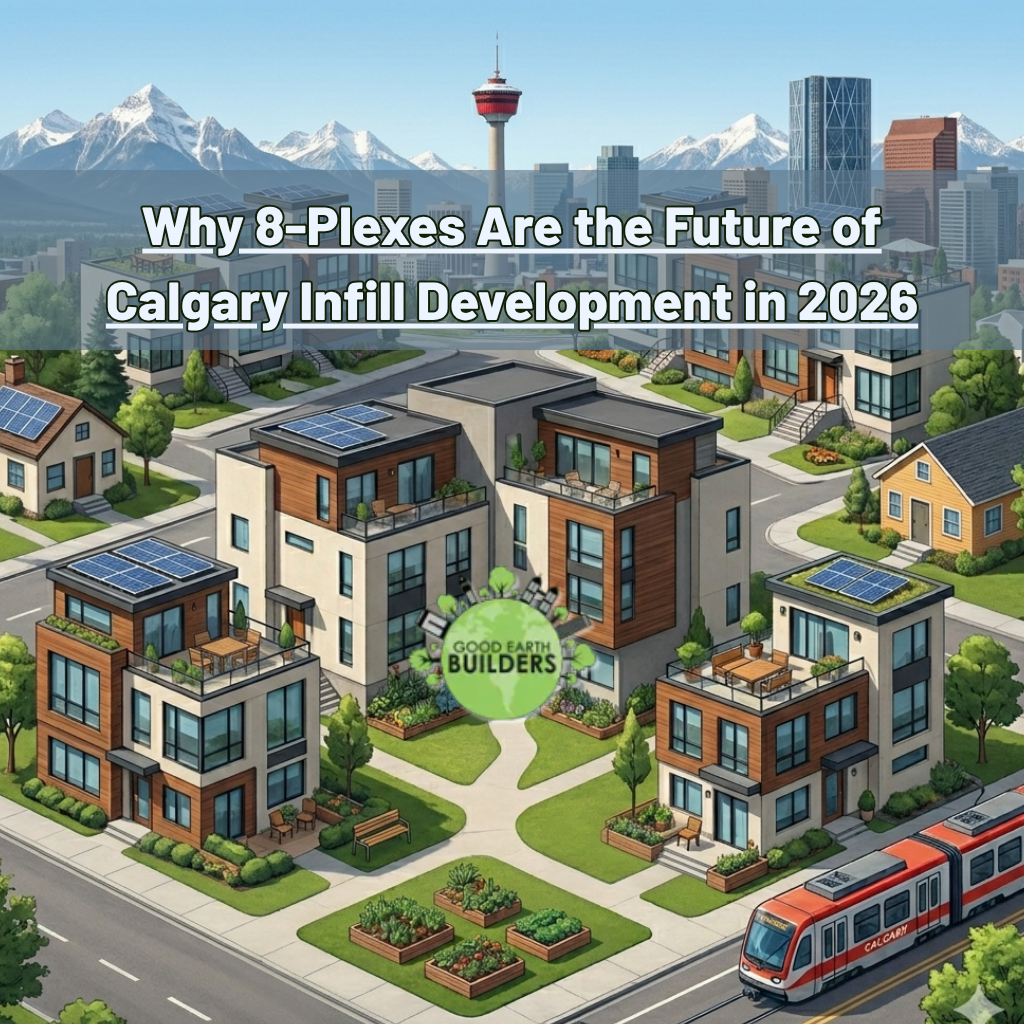
This is exactly why 8-plexes — small multi-family buildings with eight units, often four main-floor homes plus legal basement suites — are quickly becoming the future of infill development in Calgary in 2026.
An 8-plex sits in the sweet spot: denser than a duplex or row townhome, but much simpler and less risky than a 20- or 50-unit apartment building. Developers like them because they can deliver strong profits. Homebuyers and renters like them because they offer more space than condos at more affordable prices than detached houses. The city likes them because they add needed housing while respecting neighborhood character.
In this detailed guide, you’ll learn exactly why 8-plexes are positioned to lead Calgary’s infill market in 2026. We’ll cover land efficiency, rental demand, profit potential, government incentives, risk levels, flexibility, market timing, and how they compare to other housing types. You’ll also see real examples, challenges with solutions, and what the future likely holds.
1. Perfect Balance of Density and Neighborhood Fit
Calgary wants more housing, but many residents don’t want big apartment towers in their quiet streets. An 8-plex gives the city more units per lot while still looking and feeling like regular housing.
You can often build an 8-plex on one standard lot or two combined lots in neighborhoods like Forest Lawn, Highland Park, Ogden, Radisson Heights, or Killarney. The building height and design can match surrounding homes, so neighbors are more likely to support the project.
This “gentle density” approach is exactly what planners and residents are looking for in 2026. It adds housing supply without changing the feel of mature communities.
2. Excellent Land-Use Efficiency
Land is one of the most expensive parts of any infill project. With an 8-plex, you spread that high land cost across eight units instead of two (duplex) or four to six (row townhomes). This dramatically improves the economics of the project.
In 2026, a good infill lot might cost $600,000 to $1.2 million. An 8-plex lets you create eight revenue-generating units on that same land, making the per-unit land cost much lower and improving overall profit margins.
3. Strong Rental Demand and Solid Yields
Calgary still has strong demand for 1- and 2-bedroom rental units from young professionals, small families, and multi-generational households. An 8-plex can generate $15,000 to $25,000 per month in gross rent, depending on location and finishes.
After expenses, many 8-plexes deliver net rental yields of 7–9%. That is often better than duplexes (5–7%) and competitive with larger buildings, but with much lower management hassle.
In 2026, with vacancy rates expected to remain reasonable and rents growing steadily, 8-plexes offer reliable cash flow whether you hold the building long-term or sell individual units.
4. Attractive Profit Margins for Developers
Well-executed 8-plex projects in Calgary regularly achieve gross profit margins of 20–32%.
A typical 8-plex might cost $1.8M to $2.8M to build (including land). When sold as individual strata-titled units or held for rental, the returns are strong — especially when incentives are stacked. Many developers sell 6–7 units and keep 1–2 for ongoing income, creating both immediate profit and long-term cash flow.
Compared to row townhomes, you get more units per project. Compared to large apartments, you face less risk and shorter timelines.
5. Access to Multiple Government Incentives
One of the biggest advantages in 2026 is how well 8-plexes work with government programs:
- CMHC Affordable Housing Fund: Significant funding when 20%+ units are affordable
- City of Calgary DIP (Development Incentive Program): Up to $75 per square foot in targeted areas
- CEIP (Clean Energy Improvement Program): Up to 10% rebates on energy-efficient features
- Infill Fast Track: Faster permitting, saving months of holding costs
- GST Rebate: Large savings on new rental construction
- Provincial grants: Additional support for affordable units
When stacked properly, these incentives can reduce your effective project cost by 20–40%. This is a major reason many developers are choosing 8-plexes right now.
6. Lower Risk Than Larger Multi-Family Projects
Building a 50-unit apartment building requires huge capital, complex financing, long lease-up periods, and higher market risk. An 8-plex is much more manageable:
- Shorter construction time (8–14 months)
- Easier to finance
- Faster to lease or sell
- Lower exposure if market conditions change
This lower risk makes 8-plexes attractive even in a more balanced 2026 market.
7. Flexibility for Developers and Investors
You have excellent exit options with an 8-plex:
- Sell all units individually for quick profit
- Hold the entire building for rental income
- Use a hybrid approach — sell most and keep a few for cash flow
This flexibility lets you adapt to whatever the market is doing in 2026.
8. Growing Buyer and Tenant Appeal
Modern 8-plexes with good design, energy-efficient features, and legal suites appeal to a wide audience:
- First-time buyers who want more space than a condo
- Small families looking for affordable ownership
- Investors seeking strong cash flow properties
In 2026, demand for this “missing middle” housing type continues to grow.
9. Alignment with City Goals and Future-Proofing
Calgary’s Municipal Development Plan encourages gentle density in existing neighborhoods. 8-plexes fit this vision perfectly. Projects that include energy efficiency and some affordable units also align with broader climate and housing goals, making approvals easier and incentives richer.
Building to higher standards today also future-proofs your investment against stricter energy codes expected in coming years.
10. Market Timing Is Right in 2026
Construction costs have stabilized, labor is more available, rental demand remains healthy, and incentives are still generous. Many experts see 2026 as one of the better windows for mid-sized infill projects like 8-plexes before potential changes in programs or market conditions.
Real Calgary 8-Plex Performance
Recent projects in Forest Lawn, Highland Park, and Ogden have shown strong results: solid rental uptake, good margins on sale, and positive community feedback when designed sensitively. Developers who stacked incentives and focused on energy efficiency reported the best outcomes.
Challenges and How to Address Them
- Permitting delays: Use Infill Fast Track and engage planners early.
- Higher upfront costs: Stack incentives and choose experienced teams.
- Neighbor concerns: Hold open houses and design buildings that respect the street character.
With proper planning, these challenges are very manageable.
Final Thoughts
8-plexes represent the future of Calgary infill development because they solve real problems: they add much-needed housing, use land efficiently, deliver strong financial returns, work well with government incentives, carry lower risk than large buildings, and fit comfortably into existing neighborhoods. In 2026, with stabilizing costs, healthy rental demand, and supportive programs still in place, they offer one of the best risk-reward profiles in the Calgary market.
For developers and investors looking for scalable, practical, and profitable infill projects, 8-plexes check almost every important box. They are not too small to be meaningful, and not too big to be overly complicated. They strike that valuable middle ground that Calgary needs right now.
If you are exploring multi-family infill opportunities in Calgary and want practical expertise on 8-plex design, costs, incentives, permitting, and construction, working with experienced local builders who understand the full process can make a significant difference in project success.
Good Earth Builders, with over 23 years of experience in the Calgary market and 846 completed projects, has delivered many successful 8-plex and small multi-family developments. They are known for helping developers navigate incentives, manage costs, and build high-quality projects that perform well for both owners and the community. Their commitment to planting 10 trees for every job also adds real environmental value to each development.
If you’re considering an 8-plex project in 2026, reaching out to a team like Good Earth Builders can provide the local knowledge and practical support needed to turn your vision into a strong, profitable reality.